Special Keynotes

Mary Ellen Randall
2026 IEEE President & CEO
Biography
Mary Ellen Randall is an IEEE Fellow and member of the IEEE-Eta Kappa Nu honor society.
She held technical and management positions in IBM, including an international assignment, hardware and software development, digital video chips, client/server services, network management, operating systems, and test design automation. She routinely managed projects on an international scale.
She served on the IEEE Board of Directors as IEEE Treasurer, IEEE Vice President of MGA, and Region 3 Director, and has served as IEEE WIE Committee Chair among other leadership positions.
She created and developed the IEEE MOVE International Community Outreach Program for Disaster Relief and STEM education. She received awards for this work, including the IEEE Haraden Pratt Award.
Randall is founder/CEO of Ascot Technologies, Inc., an award-winning software company that develops enterprise applications utilizing mobile delivery technologies. As a result, she was named a top “Woman in Business” in the Research Triangle North Carolina area and made Business Leader Magazine’s “Impact 100” List.
She holds an M.S. in Computer Science and a B.A. in Mathematics from Binghamton University, NY, USA.
Keynotes Speakers
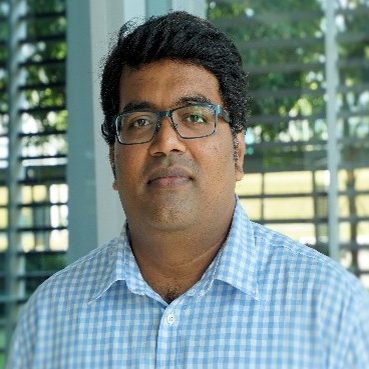
Lokesh Nagaraju
Rohde & Schwarz Regional Headquarters Singapore Pte Ltd
Abstract
Scaling 5G Connectivity: Optimizing Reach and Efficiency with RedCap, NTN and AI-RAN
To achieve true ubiquitous connectivity, 5G must evolve beyond traditional terrestrial cells and AI/ML has to be integrated. This presentation examines the synergy between 5G NTN for seamless global coverage via satellites and RedCap/eRedCap for streamlined, cost-effective IoT device integration. Furthermore, the session addresses the critical role of Artificial Intelligence and Machine Learning (AI/ML) in helping to manage the network efficiency, especially in AI-RAN. Here, we will highlight how Rohde & Schwarz is pioneering AI testing capabilities to ensure that the intelligence embedded in the RAN delivers tangible gains in spectral efficiency and network reliability
Biography
Rohde & Schwarz is a German electronics group founded in 1933 by university friends Dr. Lothar Rohde and Dr. Hermann Schwarz. Headquartered in Munich, the private company employs over 15,000 workers worldwide and specializes in electronic test equipment, broadcast and media, cybersecurity, and radiocommunication.
Lokesh Nagaraju holds the position of Senior Specialist at Rohde & Schwarz. With a wealth of experience in the telecommunications market, particularly in domain of test and measurement, focusing on 5G and IoT technologies, he has established himself as a proficient consultant involved in numerous projects across the Asia Pacific region. Additionally, he actively contributes to the support of various R&S products and conducts technical training sessions covering cellular technologies such as 5G, LTE, NB-IoT, as well as non-cellular technologies. Prior to his tenure at Rohde & Schwarz, Lokesh served as a Technology Specialist at a prominent network operator in Australia, where he played a pivotal role in the launch of Australia’s inaugural 5G, LTE 2Gbps, NB-IoT, and LTE-Broadcast devices. His professional background also includes extensive experience in RF and protocol testing. Lokesh Nagaraju holds a Bachelor's degree in Telecommunication Engineering from Visvesvaraya University, India, and has been actively engaged in the industry since 2006.
Dr. Andy Chen
President, IEEE Systems Council President
CEO, Catronic Enterprise Founding Managing Partner, REDDS Capital
President 2020-2021, IEEE Technology and Engineering Management Society (TEMS)
Abstract
Architecting Society 5.0: Driving Global Digital Transformation Through Systems Engineering and Deep-Tech Venture Innovation
The global shift toward Society 5.0 marks a structural transition from automated industrial production to a human-centric, super-smart society. Realizing this vision requires bridging breakthrough technical capabilities with economic viability through the deliberate integration of Systems Engineering (SE), Quantum Technology, and Technology Entrepreneurship backed by Venture Capital. Driven by disruptive digital technologies—such as Artificial Intelligence (AI), Cyber-Physical Systems (CPS), Big Data, Next-Generation Wireless Networks, and Quantum Computing—public sectors and commercial industries are evolving from isolated operations into highly interconnected Systems of Systems (SoS).This speech explores the global trajectories driving this transformation, detailing how systems engineering frameworks structure multi-stakeholder complexity while entrepreneurial ventures rapidly commercialize high-impact technologies to solve pressing societal challenges.
Central to this dynamic ecosystem are dedicated IEEE programs, standards, and technical initiatives that bridge technical design, deep-tech commercialization, and public policy: Systems Engineering Architecture, Quantum Computing & Engineering Acceleration, Venture Summits & Deep-Tech Investment, Entrepreneurial Strategy & Skill Building. Ethical Venture Governance.
Attendees will gain actionable insights into managing complex systems engineering lifecycles, navigating deep-tech venture funding, and leveraging quantum engineering breakthroughs to build resilient public-private ecosystems in Society 5.0..
Biography
Andy Chen serves as President of the IEEE Systems Council for 2025-2026, previously held the presidency of IEEE TEMS from 2020 to 2021, and was a member of the Board of Governors for the IEEE Computer Society between 2016 and 2020. He also acts as an Advisor for IEEE Entrepreneurship. In 2026, Andy was appointed to oversee the IEEE Impact Challenge initiative known as IEEE Response Quest. This initiative empowers innovators to use data-driven insights for emergency preparedness and response by leveraging historical disaster datasets to build realistic virtual disaster environments. These environments allow first responders, planners, and researchers to simulate, visualize, and analyze crisis situations safely. IEEE inspires global innovation through its network of over 500,000 members in more than 160 countries, along with its highly cited publications, conferences, technology standards, and professional and educational programs. It is recognized as the authoritative source for engineering, computing, and technology information worldwide.
Andy is a partner at REDDS Venture Investment Partners, helping disruptive start-ups scale globally and reach billion-dollar potential by focusing on team building, international business development, financing, mentoring, and strategic planning. He is also the President & CEO of a global consulting firm specializing in services for the utility industry around the world. Andy provides senior business advisory support to several leading consulting firms and software vendors. His previous roles include Chief Technology Officer and Vice President of Enterprise Strategy and Architecture at Canada's largest electricity generator, and Chair of the ABB International User Board of Directors.
Andy contributes to the United Nations Global Pulse's Data Privacy Advisory Group, serves as a director on the Federation of Enterprise Architecture Professional Organizations board, and sits on the Technical Advisory Council for the FinTech Ideas Festival. He has also chaired the Technical Advisory Council for YinTech Investment Holding Ltd. As a renowned speaker, Andy has delivered keynote addresses at major events such as the UN ITU Telecom World, AI for Good Global Summit, World Computer Congress, World CIO Forum, and Digital Africa Conference.
Andy earned his Bachelor of Science in Electrical Engineering from the University of Waterloo, one of Canada's top engineering universities.
Dr. Andrew D. Lowery,
IEEE Vice President, Member and Geographic Activities
Abstract
Empowering Global Communities: Leveraging Intelligent Systems and Local IEEE Networks for Regional Resilience
Societal resilience against environmental, economic, and infrastructural shocks cannot be achieved solely through centralized, top-down policies. Sustainable transformation requires local engagement, context-aware technologies, and robust community networks capable of deploying intelligent systems where they are needed most. This keynote explores the vital synergy between cutting-edge technical innovation—such as edge AI, smart microgrids, and autonomous disaster mitigation systems—and IEEE’s global geographic network.
As intelligent systems become increasingly integrated into public infrastructure, local IEEE Sections, Chapters, and Student Branches serve as crucial living laboratories and operational hubs. By connecting IEEE’s global technical standards and research with grassroots community action, local units can address unique regional challenges—from climate adaptation in coastal zones to rural grid stabilization. Attendees will gain insights into how interdisciplinary collaboration, cross-border section partnerships, and humanitarian technology initiatives can turn high-level technological concepts into scalable, real-world impact across Region 10 and globally.
Biography
Andrew D. Lowery has received degrees of Doctor of Philosophy in Mechanical Engineering (2012), Master of Science in Mechanical Engineering (2006) and dual Bachelor of Science degrees in Computer and Electrical Engineering (2004) from the College of Engineering and Mineral Resources at West Virginia University (WVU). To date, he has published 30 scholarly publications and has been awarded 5 US patents.
He has previous experience in academia as a visiting scholar and research in the alternative energy field, in the startup community as a lead scientist for advanced microwave internal combustion, and in industry as future products developer in heavy duty transportation. He is currently a Senior System Engineer at the Volvo Group in Hagerstown, Maryland.
Dr. Lowery has been an IEEE member since 2001, Eta Kappa Nu since 2004, and is an IEEE Senior Member in the Washington Section.
He is currently serving as the IEEE Vice President, Member and Geographic Activities.
Plenary Speakers
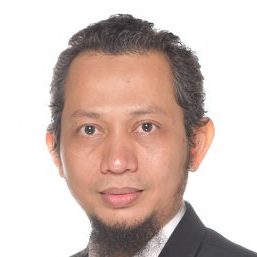
Prof. Dr. Eng Wisnu Jatmiko, S.T., M.Kom., SMIEE
Dean of Faculty of Computer Science, Universitas Indonesia
IEEE Indonesia Section Advisory Committee
Abstract
AI-Driven Intelligence in Cyber-Physical Systems: Bridging Software, Sensing, and Human Well-Being
A robot is built from three ingredients: electrical systems that sense and drive, mechanical structures that move, and software that decides what to do. Traditionally, much of the engineering effort went into the first two, with software as a fixed program written for a known task. This talk argues that AI is what turns this assembly into a robot that can act in the real world, where objects, people, and conditions are never fully known in advance. In realization of a human-centered smart society robotics extends beyond physical hardware into adaptive cyber-physical systems. Drawing from our work in telehealth, satellite surveillance, and swarm robotics, We will illustrates how embedding machine learning into point-of-care devices and sensing agents transforms static hardware into intelligent, autonomous systems. We will discuss how software-defined intelligence enables early clinical intervention, infrastructure monitoring, and disaster mitigation to address critical societal needs.
Biography
Prof. Wisnu Jatmiko received the Bachelor's degree in Electrical Engineering and the Master's degree in Computer Science from Universitas Indonesia in 1997 and 2000, respectively, and the Dr. Eng. in Micro-Nano Systems Engineering from Nagoya University, Japan, in 2007. He has been a Full Professor at the Faculty of Computer Science, Universitas Indonesia, since September 2017. Currently, he is the Dean of the Faculty of Computer Science (2025–2029), Head of the Artificial Intelligence Research Cluster at the Science Techno Park of Universitas Indonesia. His research focuses on AI for robotics and embedded systems, with prototypes including an odor source localization robot, an intelligent traffic light system, a portable smart tele-ECG, and a teleUSG application. He has published 268 Scopus-indexed documents, with an h-index of 26 (Scopus, October 2026). He served as Research Manager (2008–2012 and 2013–2017) and Head of the Master's and Doctoral Program in Computer Science (2017–2021). He is an IEEE Senior Member and was Chair of the IEEE Indonesia Section (2019–2020). His awards include the Habibie Award (2015), the National Science Ambassador (2014), the Asia Pacific ICT Research and Development Award (APICTA, 2014), the IEEE Region 10 Outstanding Section Award (2020), and IEEE membership recruitment and retention awards (2019, 2020).
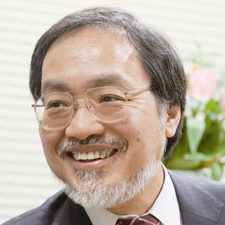
Prof. Toshio Fukuda
Professor Emeritus/Visiting Professor, Nagoya University,
Egypt Japan University of Science and Technology
Abstract
Embodied Intelligence and Robot from Coevolution and Self-organization
There are many ways to make research and development of physical AI robotic systems. I focus on “Embodied Intelligence and Robot” here based on the coevolution and self organization capabilities aiming on solving the Mega-Trend problems, including human supports, such as SDGs17. Embodied Intelligence is the intelligence not simply from the brain but to emerge from the interaction between human body, its sensor and actuators and environment. These ideas comes from the basis of the Cellular Robot System (CEBOT) which was studied for the last 40 years. There are new and challenging programs and projects aiming at the AI robotic system in future. I will introduce some of the research projects for realization of the future robot in various fields, including human supports, by back-casting technologies from the 2050 to the current ones. It is important to have new ideas for the Embodied Intelligent (physical AI) robots rather than not only applications of conventional AI.
Biography
Prof. Toshio Fukuda received Dr. Eng. from the University of Tokyo, Tokyo, Japan, in 1977. Currently, He is Professor Emeritus Nagoya University, Professor Waseda University and Vice President of Egypt Japan University of Science and Technology (E-JUST). His major is bio-robotics, especially Micro and Nano Robotics. Dr. Fukuda is IEEE President and CEO (2020), the IEEE Director of Division X, Systems and Control (2017-2018), IEEE Region 10 Director (2013-2014) and served President of IEEE Robotics and Automation Society (1998-1999), Director of the IEEE Division X, Systems and Control (2001- 2002), Co-founding Editor-in-Chief of IEEE / ASME Transactions on Mechatronics (2000-2002) and Editor-in-Chief of ROBOMECH Journal, Springer (2013-). He was Founding President of IEEE Nanotechnology Council (2002-2003, 2005).He was elected as a member of Science Council of Japan (2008-2013). IEEE Robotics and Automation Pioneer Award (2004), IEEE Robotics and Automation Technical Field Award (2010), Chunichi Culture Award(2019). IEEE Fellow (1995), SICE Fellow (1995), JSME Fellow (2001), RSJ Fellow (2004), Honorary Doctor of Aalto University School of Science and Technology (2010), Member of the Japan Academy of Engineering(2013), Medal of Honor on Purple Ribbon (2015), The Order of the Sacred Treasure, Gold Rays with Neck Ribbon (2022), IEEE Richard Emberson Award (2026).
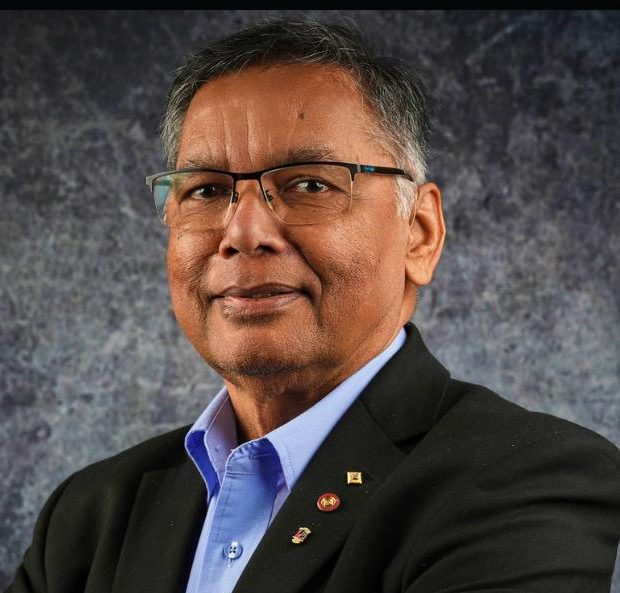
Prof. Rakesh Kumar
Chair, IEEE Future Directions and DataPort
President, TCX Technology Connexions Inc.
San Diego, CA
Abstract
The impact of DATA in today's AI world and Emerging Technology efforts at IEEE
Data is being generated at an incredible rate in this Artificial Intelligence (AI) world. Companies generate lots of Data. Infrastructure, models and algorithms are being developed at phenomenal pace. Models developed in the industry are performing better and Agentic AI tools are being developed at an extremely rapid rate. IEEE Future Directions is coordinating an effort to explore opportunities for unique contributions in this race for the development of intelligent systems. IEEE researchers generate leading edge publications built on leading research data. These efforts could lead to IEEE becoming a major player in the overall development ecosystem. In addition, this paper will outline IEEE Future Directions efforts in many emerging technology areas via the organization of Workshops involving external partners that identify collaboration opportunities. White Papers on these topics are planned to be published. Sustainability and the development of Electronics using materials that are beneficial to the environment is the focus of one of these Workshops.
Biography
Dr. Rakesh Kumar is a semiconductor industry veteran, an entrepreneur, and an educator. He is the founder, President and CEO of TCX Technology Connexions. Rakesh has educated and mentored potential engineering entrepreneurs at the University of California in San Diego. He has authored the book “Fabless Semiconductor Implementation”, published by McGraw Hill. He is an IEEE Life Fellow and was inducted into the IEEE Technical Activities Hall of Honor in 2018. At IEEE he is currently Chair of Future Directions, and DataPort, and has been President of the Solid-State Circuits Society (2012-13) in addition to numerous other leadership roles. He was Vice Program Chair for the 2017 Sections Congress. During 40+ years in the semiconductor industry he has been VP&GM at Cadence Design, and has held various technical and management positions at Unisys and Motorola. He received the Ph.D. M.S. and B.S diplomas in EE from the University of Rochester, and IIT Delhi, and an Executive “MBA” from UCSD.
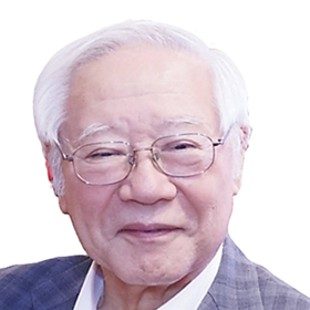
Prof. Hiroshi Iwai
Vice Dean and Distinguished Chair Professor, ICST, NYCU
Professor Emeritus, Institute of Science Tokyo
Abstract
FET100 - Plennary Talks - Evolution of CMOS from the Invention toward Nowadays 3D CMOS for AI
The concept of the field-effect transistor (FET) was proposed in 1925 as an amplifier for telecommunication that controlled the current in a Cu₂S thin film using a metal gate. In 1928, a MOSFET structure with a gate-oxide insulator was invented, but the quality of semiconductor thin films at the time was too poor for practical operation. Achieving functional MOSFETs required the establishment of numerous principles and technologies, including high-purity silicon, single-crystal substrates, the discovery of the inversion layer, the pn junction, thermal SiO₂, doping techniques, and photolithography. With these advances in place, MOSFET operation was finally demonstrated in 1960.
In the late 1960s, MOSFET-based SSI/MSI began, but instability caused by surface charges limited market adoption. Large-scale use started only in the last year of the 1960s and into the early 1970s, when MOS devices were employed in diverse LSI applications such as calculator logic, DRAM/SRAM, and microprocessors. Early LSIs had minimum feature sizes of 10–8 µm, but n-MOSFETs suffered from positive charges at the Si/SiO₂ interface that drove the threshold voltage negative, preventing transistors from turning off; therefore, p-MOSFETs were used. With the commercialization of ion-implantation machines in the 1970s, threshold control for n-MOS became possible, and high-mobility NMOS LSIs became mainstream from the 6-µm generation onward. Thereafter, scaling progressed every two to three years, enabling continuous increases in integration density and performance.
By the mid-1980s, at the 1-µm generation, power consumption and heat dissipation reached critical limits, making CMOS — where p-MOSFETs and n-MOSFETs are connected in series to suppress through-current — an essential technology. Although CMOS had been invented in 1963 and adopted in low-power devices in the late 1960s, its well structures and manufacturing complexity limited early adoption. From the mid-1980s onward, however, CMOS became the standard technology for LSI.
Since 1960, MOSFET channels have been formed using inversion layers on silicon single-crystal surfaces. Early FET patents envisioned controlling the entire thin film with the gate field, but this required high-quality films as thin as molecular dimensions, which were not achievable for decades. As a result, MOSFETs using inversion layers on bulk single-crystal substrates — i.e., bulk MOSFETs — remained the only practical option for high-performance LSIs.
When gate lengths shrank to a few tens of nanometers, the drain electric field raised the substrate potential near the source, causing threshold-voltage reduction and punch-through currents. To strongly control the channel potential near the source, double-gate (DG) structures with gate electrodes above and below the silicon thin film were investigated. Manufacturing of FinFET LSIs — a type of DG structure — began at the 22-nm generation in 2012, and FinFETs became the mainstream technology for leading-edge LSIs. Although DG concepts had been proposed since 1935, experimental FinFET operation was first demonstrated in 1989, and its introduction into products took more than 30 years.
As gate lengths approached 10 nm, even stronger electrostatic control became necessary. Gate-All-Around (GAA) structures, in which the gate electrode surrounds silicon nanosheets only a few nanometers thick, began to be used in parts of the 3-nm generation starting in 2024. From the 2-nm generation onward, manufacturers have adopted three-dimensional GAA integration, stacking multiple nanosheet channels vertically. GAA also has a long history, with the concept proposed in 1957 and experimental demonstration in 1986.
GAA 3D-integrated LSIs have extremely complex structures and require many fabrication steps, resulting in enormous manufacturing costs. However, the strong demand for AI has supported the production of these high-cost LSIs.
The scaling of gate length and minimum feature size is expected to reach its limit around 10 nm, and current LSI development is shifting toward three-dimensional integration. Increasing process complexity, rising costs, declining yield, and higher heat generation per unit area due to 3D integration are becoming major challenges.
This talk will explain the evolution of LSI technology, discuss current issues, and address future prospects.
Biography
Hiroshi Iwai received his B.E. and Ph.D. degrees from the University of Tokyo. After joining Toshiba in 1973, he devoted more than fifty years to advancing LSI technologies and products, from the 8-µm PMOS LSI generation to the present, through his work at Toshiba, the Tokyo Institute of Technology / Institute of Science Tokyo, and NCTU / NYCU. His wide-ranging contributions include developing Toshiba's first NMOS LSI technology and 1-kbit SRAM in the mid-1970s, which was later used in the world's first microprocessor-based engine control system for the 1978 Ford Lincoln Versailles. In the late 1970s, he introduced stepper lithography and dry processes for 64k DRAM mass production, achieving one of the earliest VLSI fabrication approaches worldwide.
In the early 1990s, he operated sub-50 nm MOSFETs — two generations ahead of competitors — and developed essential sub-50 nm technologies such as NiSi salicide, presenting a roadmap down to sub-25 nm. In the mid-1990s, he launched Toshiba's RF CMOS project, realized a one-chip RF front-end for GSM with European collaborators, and established the RF CMOS roadmap that underpins modern smartphones.
He has received major awards including the IEEE EDS J.J. Ebers Award, Paul Rappoport Award, Cledo Brunetti Award, ECS Callinan Award, and ECS Gordon Moore Medal. He is a Life Fellow of IEEE, ECS, and JSAP, and a Fellow of IEICE and IEE Japan. He is an Eminent Lecturer at IEEE EDS. He served as IEEE EDS President (2004–05) and IEEE Division I Director (2010–11). He currently serves as Vice Dean and Distinguished Chair Professor at NYCU and as Professor Emeritus at the Institute of Science Tokyo.
Invited Track Speakers

Prof. Takako Hashimoto, Ph.D
IEEE Region 10 Director
Deputy to the President, Professor, Chiba University of Commerce Research Fellow, University of Tokyo
Abstract
The Future Opened by Survival Informatics: Data Connecting Human and Social Well-being
Survival Informatics is an emerging interdisciplinary approach, currently being discussed within the Science Council of Japan, that explores how data-driven methods can contribute to sustaining human life and enhancing social well-being in an increasingly complex world. By combining perspectives from information science, artificial intelligence, and the social sciences, Survival Informatics aims to establish reliable ways of understanding and addressing global challenges such as disasters, health crises, climate change, and social inequalities. This talk highlights the role of data as a bridge that connects individuals, communities, and institutions, enabling evidence-based decision-making and fostering resilience in both physical and cyber spaces. Through case studies and recent research, we demonstrate how Survival Informatics not only advances scientific insight but also provides practical solutions that enhance human and societal well-being.
Biography
Takako Hashimoto graduated from Ochanomizu University in Japan, and received a Ph.D. in computer science, specialization in multimedia information processing, from the Graduate School of Systems and Information Engineering of University of Tsukuba in 2005. She worked at the software R&D center of Ricoh Co. Ltd., in Japan, for 24 years, and participated in the development of many software products as a technical leader. From April of 2009, she joined Chiba University of Commerce. In 2015, she stayed at University of California, Los Angeles as a visiting researcher. She is currently serving as Director, Deputy to the President, Dean of Faculty of Commerce and Business Administration. She has focused on data mining research and social media analysis, especially topic extraction from millions of tweets related to disasters and topical problems like COVID-19. She is serving as Associate Member of the Science Council of Japan, and Chair of the National Council for Research and Development Committee, Ministry of Internal Affairs and Communications. She served as a Board Member of the Database Society of Japan, Chair of IEEE Japan Council (2021-22), and BoG of IEEE Computer Society (2021-23) and has served as the Past Chair of IEEE Women in Engineering (2015-16). She is now IEEE R10 Director (2025-26). In 2019, she received the IEEE 2019 MGA Larry K. Wilson Transnational Award, and Fellow of the Information Processing Society of Japan.
Prof. Chun Che Lance Fung
IEEE Region 10 Past Director
Emeritus Professor, Murdoch University
Abstract
AgeTech 2030: The Next Big Technology Opportunity?
Aging population is one of the challenges confronted by many governments; it is also potentially one of the greatest technology opportunities in the coming years. By 2030, more than 1.4 billion people worldwide will be aged 60 or over. AgeTech is emerging with the integration of Bio-Med, AI, Robotics, IoT, Digital health, Smart homes, and, Human-centred design, with the potential to transform future of the world how population will live, work, and age gracefully. This talk looks beyond today’s wearable devices and aged-care technologies to explore the research areas, startups, and job opportunities that could define AgeTech 2030. It asks a fundamental question: Can technology help us not merely live longer, but remain healthier, independent but connected, and, contribute to humanity for longer? For students, researchers and entrepreneurs, AgeTech may represent the frontier where technology meets humanity, longevity, a rapidly growing global market, and turning interdisciplinary research into practical impact.
Biography
Emeritus Professor Chun Che Fung is an IEEE Life Senior Member, and former IEEE Region 10 Director (2023–2024). He has had a distinguished academic and professional career spanning more than four decades, with academic appointments at Singapore Polytechnic, Curtin University, and Murdoch University, where he is now Emeritus Professor. Professor Fung holds a PhD degree from The University of Western Australia, and has extensive research experience in Computer Technology, AI, Artificial Neural Networks, Computational Intelligence, Machine Learning, Intelligent systems, and Knowledge-based technologies, with applications in areas including power systems and energy, instrumentation and control, robotics, data analytics and healthcare. He has supervised more than 30 PhD students, and published more than 350 academic papers and research outputs. He is a dedicated IEEE volunteer for almost three decades, Professor Fung has held numerous leadership positions in IEEE at Section, Council, Region, Technical Society, IEEE Major Boards, and various IEEE Committees. His professional interests extend beyond technological innovation to Responsible AI, Ethics, Digital transformation, and the use of technology for the betterment of humanity.
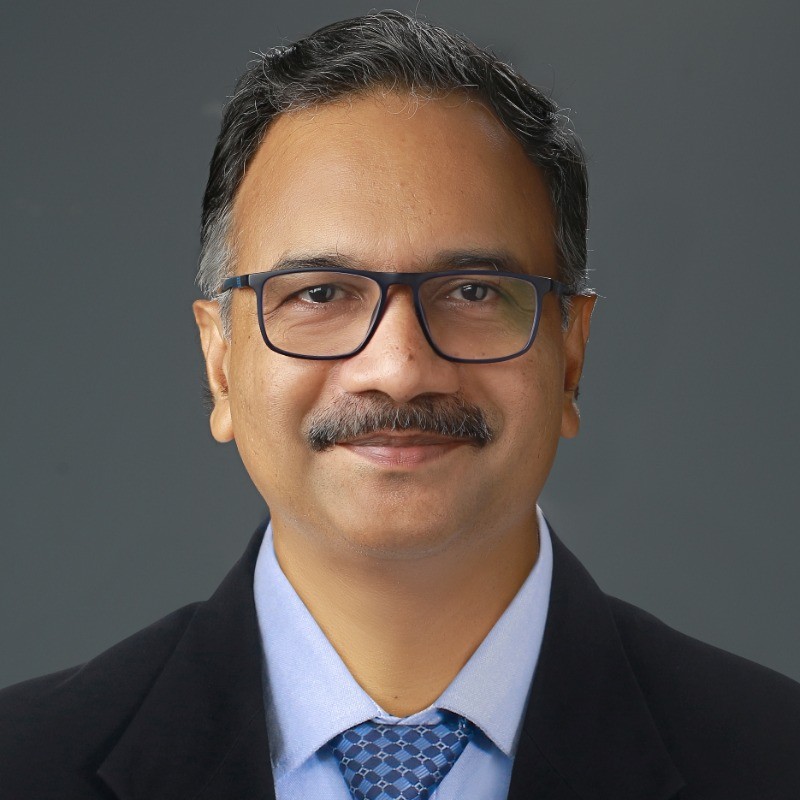
Prof. Sameer S. M.
Professor, Department of ECE, National Institute of Technology Calicut, India
Director-Elect (2025-26), IEEE Region 10
Abstract
Architecting Next-Generation Communication and Networking: Research Frontiers, Technology Convergence, and Pathways to Global Impact
As global communication and networking systems undergo a radical evolution, the next decade demands a fundamental transition from traditional capacity-driven architectures toward autonomous, AI-native, and system-centric network ecosystems. This keynote will explore the critical research frontiers defining the 2026–2036 landscape, including 6G wireless systems, semantic and goal-oriented communications, Integrated Sensing and Communication (ISAC), edge intelligence, and networking.
Beyond identifying key technical challenges, the talk shall outline a strategic roadmap to help researchers navigate this technological convergence. It will provide actionable frameworks to bridge theoretical innovation and high-impact realization through active participation in global standardization (IEEE/3GPP), open innovation, and industry technology translation.
Biography
Prof. Sameer S. M. received his M.Tech and Ph.D. in Communications and Networking from IIT Kharagpur, India. After professional experience in industry, he joined NIT Calicut in 1998, where he is currently a Professor in the Department of Electronics and Communication Engineering. He has served as Head of ECE, Head of the Center for Career Development, and Dean (Academic) at NIT Calicut.
He has published around 90 papers in reputed international journals and conferences and holds one Indian and two US patents. He has received multiple Best Paper Awards in national and international conferences.
A Senior Member of IEEE, he has held several leadership positions, including Secretary, IEEE Region 10; Chair, IEEE Kerala Section; Treasurer, IEEE India Council; and Chair, IEEE Region 10 Conference Quality & Management Committee. He served as General Chair/Co-Chair of major IEEE conferences, including TENCON 2019 and INDICON 2022. He is the recipient of the IEEE Region 10 Outstanding Volunteer Award (2020) and is currently the 2025–26 Director-Elect of IEEE Region 10 (Asia-Pacific).
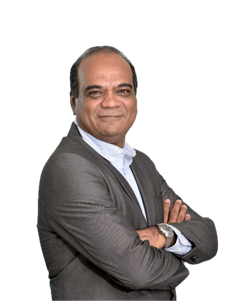
Dr. Sudeendra Koushik
President IEEE Technology and Engineering Management Society (TEMS)
Abstract
Leadership by Collaboration
Innovative Leadership by Collaboration is about adapting to changing environments, new context with diverse needs. This is critical for successful Leadership especially when it spans across generations not to mention geo-political boundaries. While no one method would suffice, a vague approach would not work either. This talk focuses on what we can do to be first aware, then assess and adapt our approaches to leadership. The ability to bring innovative approaches for win-win is necessary the same what but with a different how. The talk also will discuss the role of collaboration and recognition in this approach.
Biography
Dr. Sudeendra Thirtha Koushik is a globally recognized innovation leader, entrepreneur, technology management professional, and long-standing IEEE volunteer with over 32 years of international industry experience across India, Singapore, and The Netherlands. His career spans innovation, technology management, product and service development, intellectual property, organizational leadership, customer engagement, and innovation transformation at organizations including Philips, NXP, HCL, TTK Prestige, Volvo Group, and Innovation by Design.
He currently serves as President of the IEEE Technology and Engineering Management Society (IEEE TEMS). He has given keynotes on Innovation, Research, Entrepreneurship and Ethics and several other topics. Dr Koushik is known for his talks which engages the audience and is a two times TEDx speaker. He is also a cartoonist, TV and Cinema actor.
Dr. Koushik has contributed to more than 50 patents and innovation disclosures, including innovations developed at Volvo India, and has authored multiple publications on innovation management, innovation skills, intrapreneurship, and industry-academia collaboration, including contributions to the Wiley-published TEMSBOK framework and IEEE Engineering Management Review.
A successful entrepreneur and innovation consultant, his clients include Siemens, Volvo, Daimler, ZF, Continental, Bosch, and several leading organizations, where he has helped build innovation culture, develop innovation skills, and generate business-relevant intellectual property. He actively supports startup ecosystems through mentoring, accelerators, incubators, and innovation centers, and serves as visiting faculty and mentor at institutions including NID, IITs, University of Arkansas, and San Jose State University.
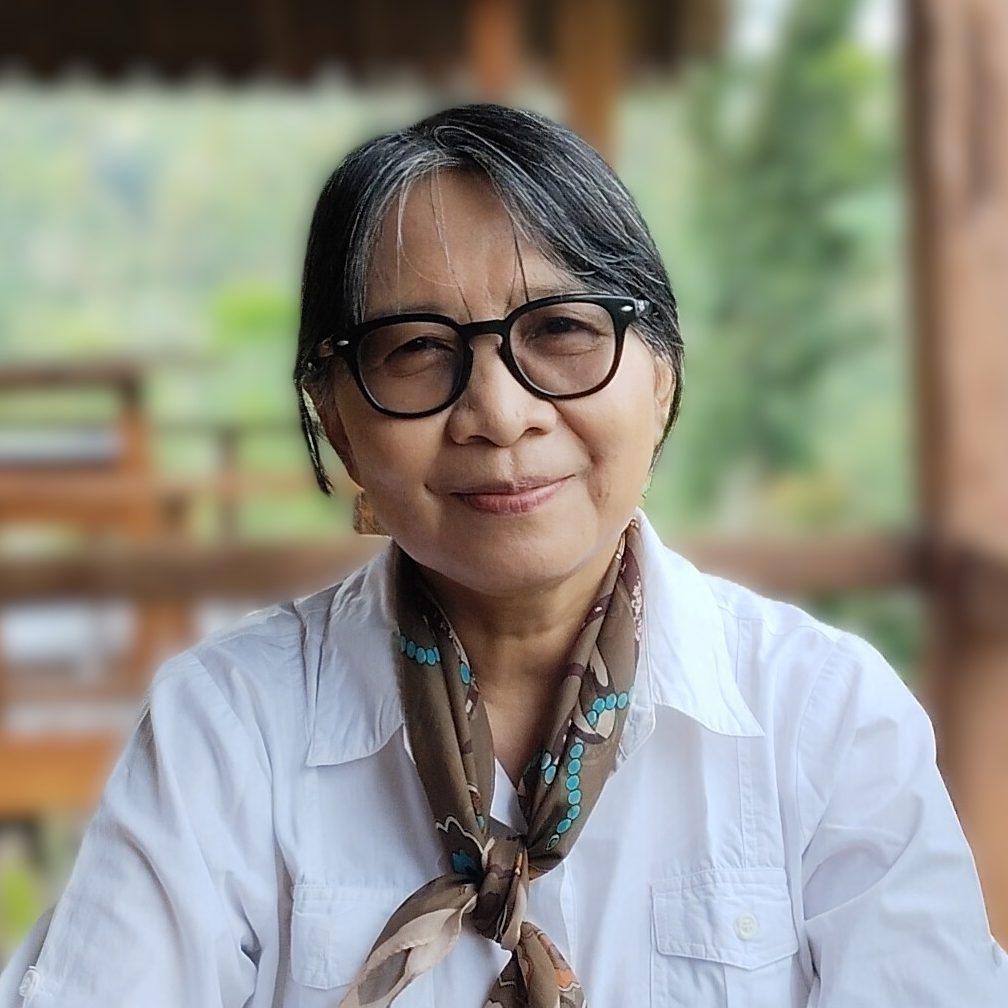
Prof. Linawati
Dean of Engineering Faculty, Universitas Udayana
Abstract
Technology for Sustainable Tourism Development
Bali is renowned for its tourism and remains the primary destination for international tourists in Indonesia, contributing 45.8 percent of total national visits. In 2025, total tourist visits to Bali reached 16.3 million — nearly four times Bali's population. This high number of tourists causes various challenges that must be addressed proactively. Issues such as land-use conversion, waste management, ecosystem disruption, clean water availability, and traffic congestion require an integrated approach and smart solutions.
A sustainable tourism development strategy is therefore a priority to guarantee that tourism growth continues to align with environmental sustainability and community well-being. Sustainability principles refer to a suitable balance that must be established between environmental protection, social and cultural respect, and economic viability.
To address these challenges, technology is the solution to drive sustainable development by accelerating scalable solutions for smart city or digital village environmental monitoring, providing smart infrastructure, and supporting cultural preservation. This talk offers insights on technology strategy for building quality tourism development.
Biography
Linawati holds a PhD in telecommunications engineering from the University of New South Wales, Sydney, Australia, awarded in 2004. She has held several positions and responsibilities in her workplace and in professional organizations, including Executive Director of the Global Development Learning Network (GDLN) and Head of the ICT Division at the University for nine years. During that time she was actively involved in developing e-learning, m-learning, and distance learning at Udayana University, in collaboration with higher education institutions in Indonesia and across the Asia Pacific under World Bank support.
She has won research and community service funding from many sources. She has chaired international conferences, workshops, focus group discussions, seminars, and training programmes involving a wide range of professionals from many backgrounds. She served as Secretary of the IEEE Indonesia Section (2021–2024) and as Director of the Postgraduate Program, Universitas Udayana (2021–2023), and serves as Dean of the Faculty of Engineering, Universitas Udayana (2023–2027).
Prof. Edward Yi Chang
Chair Professor, National Yang Ming Chiao Tung University, Hsinchu, Taiwan
Abstract
GaN Power Devices for Next-Generation Power Electronics: Fundamentals and Future Applications
Gallium nitride (GaN) has emerged as a key wide-bandgap semiconductor for next-generation power electronics, offering high breakdown strength, high electron mobility, fast switching capability, and low on-resistance. This talk will introduce the fundamental material properties and operating principles of AlGaN/GaN high-electron-mobility transistors (HEMTs), including polarization-induced two-dimensional electron gas formation, epitaxial growth, device fabrication, and breakdown-voltage engineering.
Particular emphasis will be placed on enhancement-mode GaN power devices and advanced ferroelectric charge-trap gate technologies for achieving high threshold voltage and high current capability with proven device reliability. Finally, the opportunities of GaN power technology for electric vehicles, fast charging, solar cells, data-center power conversion, and other emerging high-efficiency power applications will be discussed, highlighting its important role in future energy-efficient electronic systems.
Biography
Dr. Edward Yi Chang received his Ph.D. degree from the University of Minnesota in 1985. He is an Academician of Academia Sinica, IEEE Life Fellow, JSAP Fellow International, and IEEE EDS Distinguished Lecturer. He currently serves as Director of the TSMC Center at National Yang Ming Chiao Tung University, Taiwan. A world-renowned expert in III–V semiconductors, Prof. Chang has devoted more than 30 years to pioneering GaAs and GaN electronics and has authored over 700 GaN-related publications, making seminal contributions to high-performance and high-power GaN device technologies.
Dr. Narottam Das
Senior Lecturer
Central Queensland University, Australia
Abstract
Optimal Sizing of Grid-Connected Solar Photovoltaic Systems for Residential Households in Central Queensland
Australia’s transition toward renewable energy has driven rapid adoption of photovoltaic (PV) systems, particularly in Queensland, where high solar potential and feed-in-tariffs make solar generation attractive. However, its intermittency and high cost of battery energy storage (BES) remain setbacks to system reliability and economic optimisation. This study investigates the techno-economic and environmental feasibility of residential grid-connected PV-BES systems in Central Queensland using HOMER Pro-software. Both generic parametric models and configurations based on Clean Energy Council approved components were simulated to identify optimal system sizes. The obtained results indicate that PV-grid provides the strongest economic performance with 6.3-year payback period, 15% internal rate of return, and 68.3% net present cost reduction compared to grid-only. Although PV-BES offer improved grid independence and 94.2% renewable penetration, they remain marginally economical under current battery prices. Sensitivity analysis reveals that PV-BES become economically viable as battery costs and sellback rates decline, reinforcing the advantage of self-consumption over grid export. Environmental analysis showed that PV-BES achieved net negative emissions of approximately ⁓7,000-kg CO₂/year compared to 2,500-kg/year from grid-only systems. The findings demonstrated that PV systems are already cost-effective for Central Queensland households, while PV-BES adoption depends on battery cost reductions and policy support.
Biography
Dr. NAROTTAM DAS (S’97, M’01, SM’05) received the B.Sc. degree (Hons.) in electrical and electronic engineering from the Chittagong University of Engineering and Technology, Chittagong, Bangladesh; the M.Sc. degree in electrical and electronic engineering from the Bangladesh University of Engineering and Technology, Dhaka, Bangladesh; and the PhD degree in electrical engineering from Yamagata University, Japan, in 2000. Currently, He is a Senior Lecturer in electrical engineering at the School of Engineering and Technology, Central Queensland University, Melbourne, Victoria, Australia. He has over three decades of experience as an academic and Industrial Engineer in Australia and overseas. His PhD research project was funded by the Ministry of Education, Culture, Sports and Technology (MEXT), Japanese Government Scholarship (Monbusho Scholarship). He is the author/co-author of over 280 peer-reviewed journal articles and international conference proceedings, including 11 book chapters and four edited books, such as Nanostructured Solar Cells, Advances in Optical Communication, Optical Communications, and Optical Communication System. His research interests include power and energy systems, renewable energy, solar photovoltaic (PV) systems, multi-junction solar (PV) cells, power system communications (smart grids) using IEC 61850 for protection and control, system modelling and simulations, high-speed communication devices, and nanotechnology/ electronics. Currently, Dr Das is an Executive Committee Member of Electrical College Victoria Branch (ECVB) as Deputy Chair, Engineers Australia, Vice Chair of the IEEE PES, PHS and IEEE IAS, Victorian Section, USA. He is a Senior Member of the IEEE PES and PHS, USA; a fellow of the Institution of Engineers, Australia, CPEng, and NER; Fellow of the Higher Education Academy, UK, and a Life Fellow of the Institution of Engineers, Bangladesh. He is the Guest Editor of the MDPI Journal Energies, Special Issue on “New Technologies in Photovoltaic Solar Cells”. Currently, Dr Das is an Academic Editor of the IET Circuits, Devices and Systems Journal, UK.
Speaker #20
Designation to be announced
Biography
Biography and talk abstract will be published shortly.
Prof. Weisi Guo
Professor
Cranfield University
Abstract
Adversarial AI Descent Rate Attack on Rotorcraft Automated Landing Flight Control System
Autonomous flight control systems (FCS) is increasingly introduced into aviation, especially for low risk platform and mission categories. Autonomous rotorcraft landing is a high skill task and usually requires the rotorcraft to balance an altitude-based descent rate, whilst taking measurements from onboard sensors. As the complexity of the sensor input space increases, deep learning agents are increasingly selected over classical control techniques. Here, we explore whether an autonomous landing controller can be successfully attacked by an intelligent spoofing agent, that feeds the onboard sensor with a sequence of poisoned altitude data. The spoofing agent uses an tailor designed Deep Deterministic Policy Gradient (DDPG) agent that tries to overcome the landing agent’s ability to stabilize the landing process, leveraging on the abundance of offline data and the absence of online real data. Our baseline shows our helicopter can land successfully using a pre-trained AI-FCS, assuming the observation sensor data is correct. Our innovation results show that we can achieve an average of 97.3% attack success chance across different scenarios, and this red-team analysis underscores the need for robust defenses if AI is used to solely in flight control systems.
Biography
Prof Weisi Guo obtained MEng, MA, and PhD degrees from the University of Cambridge. From 2012 to 2019, I built an award-winning team at the University of Warwick and was a Turing Fellow at the Alan Turing Institute. Since 2019, he joined Cranfield University where he leads the Centre for Assured & Connected Autonomy. He has published over 180 journal papers including Nature commentary, Nature Communication, Nature Computation Science, Nature Machine Intelligence. -
Prof. Indra Jaya
Professor
IPB University
Abstract
Empowering the Next Generation: A Student-Centered Acoustic Observatory for Tropical Lagoon Restoration
The extensive coastal lagoons of the Indonesian archipelago serve as critical reservoirs of tropical marine biodiversity, yet they are increasingly threatened by anthropogenic stressors and accelerating habitat degradation. In alignment with Sustainable Development Goal 14 (Life Below Water) and the broader objectives of the UN Ocean Decade Programs, there is an urgent need for long-term, operational ocean observation systems. To directly address this need—and to cultivate the next generation of marine technologists—students have been actively integrated into this endeavor from the very onset of system development, making this a fundamentally student-centered initiative. This presentation details our approach to building a low-cost, autonomous, real-time Passive Acoustic Monitoring (PAM) platform, specifically engineered for continuous lagoon health assessment. Students are instrumental in the full lifecycle of this system: they participate in the physical development of the hardware and they lead the calibration and management of the onboard edge-computing unit. This unit executes real-time algorithmic processing, computing a comprehensive suite of soundscape indices that capture biophony, geophony, and anthrophony. By performing this in-situ filtering, students help drastically reduce data dimensionality and transmission power requirements, ensuring that only relevant acoustic signatures are relayed. The surface buoy's telemetry system periodically sends aggregated indices and compressed audio snippets to a central server, with students actively overseeing data quality control, preliminary diagnostics, and the tuning of transmission protocols. The low-latency, low-power architecture guarantees robust, and long-term endurance, while the system's cost-effectiveness—optimized through student-led fieldwork —offers immense scalability potential for covering numerous degraded lagoons across the archipelago. Ultimately, this student-driven monitoring network non-invasively tracks natural recovery trajectories, steering these vulnerable ecosystems toward resilient, fully functional, and healthy tropical marine habitats.
Biography
- -
*) Speaker on confirmation